

In a world where supply chains span continents and embrace both physical goods and digital data flows, organisations face ever-growing complexity and risk. From cargo movements and raw-material inputs to multi-tier supplier networks and real-time data exchanges, every link in the chain is a potential vulnerability. At MakeWise, we empathise with the modern supply-chain professional who must deliver efficiency, cost-control and resilience all while safeguarding assets, shipments and data. In this context, leveraging AI vision technologies offers a new frontier for securing supply-chain operations, enabling visibility, verification and prevention rather than simply reaction.
What is the AI’s Role in Supply Chain Security?

Artificial intelligence plays a transformative role in supply-chain security by enabling proactive, data-driven protection across both physical and digital domains. AI systems can monitor large volumes of data from sensors, cameras, networks and supplier systems, identify anomalies, and highlight threats before they escalate. For instance:
- Real-time detection enables companies to spot unusual patterns, such as unexpected access attempts, cargo diversions or network traffic spikes, thereby reducing breach response times.
- Predictive risk allows organisations to assess supplier vulnerabilities, geopolitical disruption and transport-route fragility ahead of time, shifting from reactive fixes to strategic prevention.
- Data-and-asset protection applied broadly means AI supports encryption, access-controls and monitoring of the full supply-chain data flow helping to guard against tampering, leakage or unauthorised access.
- The physical and digital security is becoming crucial: computer-vision systems and AI algorithms enable companies to verify what is happening on the ground inspecting cargo integrity, verifying shipments and ensuring chain-of-custody.
This role of AI is no longer optional. As supply chains become more digitised and interconnected, relying on legacy security tools alone is no longer sufficient. Organisations that deploy AI-enabled visibility and decision-support systems gain a clear strategic advantage in resilience and trust.
Use Cases of AI in Supply Chain Security
To illustrate how AI vision and analytics can be applied concretely to supply-chain security, consider the following use cases:
- Goods in transit verification: imagine a shipment of raw materials leaving a plant, loaded onto trucks, transferred at intercept points and delivered to a processing facility. With vision-enabled sensors and AI analytics, the system monitors cargo loading, recognises object types, tracks packaging condition and verifies destination arrival. Any anomaly wrong load, packaging breach, unauthorised stop triggers an alert.
- Supplier risk monitoring and validation: AI analytics scour supplier networks digital records, inspection images, access logs and transport data to evaluate integrity. The system can detect anomalies such as repeated minor infractions, increased divergence between expected and actual shipments, or unusual third-party access. These insights guide procurement and operations decisions before crises occur.
- End-to-end integrity and fraud prevention: the convergence of vision systems with AI means that from origin through to delivery, every physical movement can be captured, analysed and verified. This is particularly powerful in industries where cargo tampering, theft, diversion or mis-shipping are real risks. AI vision closes the gap between what is assumed to be happening and what is actually happening.
- Data-driven operational oversight: beyond security alone, the same AI systems deliver metrics: load volumes, packaging condition, transit times, exception rates. These metrics allow organisations to monitor not only risk but also performance turning security systems into operational enablers.
In each case, the combined capabilities of computer vision, sensor-data fusion and AI analytics deliver deeper insight, earlier warning and stronger control.
Introducing CHECKPOINT.VISION
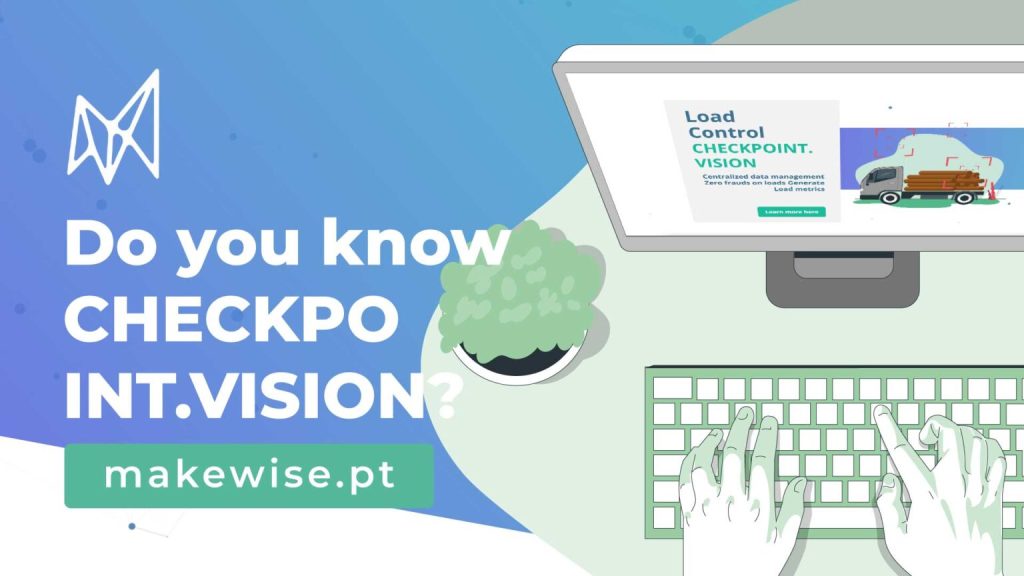
At MakeWise we have developed CHECKPOINT.VISION, a tailored solution designed to embed AI-driven vision into supply-chain security workflows. Key features of CHECKPOINT.VISION include:
- Object recognition and transport-cargo verification: the system can identify goods and monitor their movement from origin to destination.
- Centralised and secure data access: all information about loads, measurements and shipment integrity is managed within a unified platform.
- Zero-fraud integrity validation: the system enables validation that what was planned (manifest, packaging, routing) matches what actually arrives.
- Load metrics and measurement by computer vision: the platform generates data (for example volumes, packaging condition, transit states) to feed dashboards and decision-making.
- Integration capability: CHECKPOINT.VISION is designed to fit into existing logistics/ERP systems, enabling seamless adoption without wholesale overhaul.
By deploying CHECKPOINT.VISION, organisations gain a tangible tool that realises the AI-vision potential: visibility into physical flows, integrity verification, fraud prevention and data analytics all aligned with security-first supply-chain thinking.
At MakeWise, we believe that supply-chain security demands more than reactive controls. By deploying solutions such as CHECKPOINT.VISION, organisations can shift from vulnerability to strength from uncertainty to visibility and secure both the physical and digital essence of their logistics operations.
Confirm all MakeWise’s solutions here and start your business digital transformation journey today. Contact us!